|
|
||||||||
| |
|
|
|
|
|
|
|
|
| |
||||||||
| |
||||||||
| |
 |
||||
| |
 |
||||
| |
|
||||
|
|
SAXON INDUSTRYWith the departure of the Romans many of the technological and craft skills introduced by the Romans seem to have disappeared. Other craft skills took their place with the coming of the Saxons. East Kent became famous as a centre for the manufacture of fine glass vessels and luxurious jewellery. There was no distinctive industry or craft associated with West Kent in general and the Dartford area in particular.
|
||||
 |
|||||
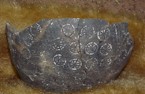
POTTERY MANUFACTURESaxon clay pots appear to have been produced by individual households in most communities, and this was probably the case in and around the Dartford area. Dumps of clay have been found close to some Anglo Saxon settlements in the south of England. Much of the pottery retrieved from local Saxon sites has been decorated using stamps made from deer antler. Geometric and other shapes were carved into the antler and then pressed into the clay. Most Saxon pottery found in the Dartford area is of poor quality. The range and form of decoration is relatively limited. Archaeologists have concluded that the Saxons probably did not construct proper pottery kilns. Hand-shaped and decorated pottery was probably fired at low temperature on an ordinary bonfire, causing uneven firing.
|
|||||
Next topic: Transport
|
|||||
|
|||||
 |
|
||||