|
|
||||||||
| |
|
|
|
|
|
|
|
|
| |
||||||||
| |
||||||||
| |
 |
||||
| |
 |
||||
| |
PILGRIMS AND OTHER VISITORS |
||||
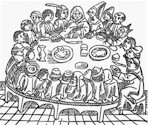
IN THE FOOTSTEPS OF CHAUCER'S PILGRIMSPilgrimages were important in medieval times as a route to salvation and also as a pretext for travel. Pilgrims travelled recognised routes stopping off at shrines and cathedrals where relics were venerated and saints worshipped. Dartford was only one day’s walk from London and was the first stopping-off place for pilgrims en route to Canterbury, to visit the shrine of Thomas Becket, or to Rochester to visit the shrine of William Perth. The shrine of the murdered archbishop situated in Canterbury cathedral, became the most important and most-visited shrine in England. Medieval pilgrims were representative of all social groups and classes, but came mainly from the middle class like Chaucer’s Canterbury pilgrims who rode on horseback. Poor pilgrims had to make the journey on foot.
|
|||||
 |
|||||
ACCOMMODATION AND SOUVENIRS FOR VISITING PILGRIMSMost pilgrims setting out from London reached Dartford by nightfall. Inns and hostels were provided for their accommodation. Five of the town’s inns were owned by the prioress of Dartford. Dartford’s principal medieval inns were le Hole Bull, The Saracen’s Head, The Cock-on-the-Hoop, and The Bell. Dartford traders made a reasonable living selling souvenirs to the pilgrims. To prove they had visited a particular shrine, pilgrims bought lead or pewter souvenir badges. Two-handled miniature lead pilgrim flasks (ampullae) for holy water or oil could be sewn onto hats or clothes, worn round the neck, or the contents sprinkled on fields to guarantee a good harvest. Small ampullae purchased at Canterbury contained drops of water that were reputedly mixed with an essence obtained from the blood and brains of the murdered archbishop. This mixture was supplied to Canterbury pilgrims until 1538. Dartford traders protested at their loss of income from the manufacture and sale of these souvenirs when Henry VIII abolished pilgrimages.
|
|||||
|
|||||
CHAPELS AND HOSTELS FOR THE PILGRIMSThe chancel at Holy Trinity church was rebuilt in the thirteenth century and two small chapels, the St. Thomas a Becket chapel and the Lady chapel, were added to meet the spiritual needs of the many pilgrims passing through Dartford. Additional accommodation was provided by the construction of the Trinity Almshouse shortly after 1452. This timber-framed building constructed partly on the east bank of the River Darent and partly on piers in the river accommodated both resident paupers and visiting pilgrims. Many pilgrims passing through Dartford wore the recognised pilgrim uniform comprising a broad-brimmed hat and russet-coloured gown drawn in above the waist with a belt, rope or rosary. The pilgrims also carried a satchel or ‘scrip’ and a stout stick or staff. Next topic: Lepers
|
|||||
|
|||||
 |
|
||||