|
|
||||||||
| |
|
|
|
|
|
|
|
|
| |
||||||||
| |
||||||||
| |
 |
||||
| |
 |
||||
| |
THE RICHCHARITY AND GOOD WORKSAs Dartford developed into a small town, merchants and rich individuals began to establish permanent residences close to the town centre, mainly in and around Overy Liberty a suburb which developed along the east bank of the River Darent across the town bridge away from the main focus of settlement. The town’s most prominent families played a charitable role in the community. In 1346, John de Bicknore, Lord of the Manor of Portbridge (Bignores) endowed the chapel of St Edmund with five marks a year to pay for a chaplain. Later, in 1476, Thomas Taylor directed in his will that the family mansion in Overy Street should be sold to finance the appointment of a chantry priest at Holy Trinity church, and the residue of his worldly wealth "to be distributed in deeds of charity".
|
||||
 |
|||||
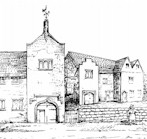
TOWN HOUSES FOR THE RICHSome of Dartford’s wealthy residents constructed mansions in the town centre. John Martin, England’s judge of the common pleas in the early fifteenth century, built a fine house on a plot of land at the junction of Lowfield and High Street. He owned land and properties in Dartford and founded Martin’s chantry at Holy Trinity church. Horsman’s Place, another imposing mansion, was situated south of the High Street in Lowfield, not far from the River Cranpit. This house, which existed in the early fourteenth century, was originally owned by Thomas de Luda who arranged with the abbot of Lesnes Abbey to divert the River Cranpit to ensure that the house had a reliable and constant water supply. Next topic: The poor
|
|||||
|
|||||
 |
|
||||